
Your Competitor Isn't AI. It's Indifference.

Every few months, marketing finds a new villain.
First, it was social media. Then it was short-form videos. Then algorithms. Then ChatGPT. Now, AI has taken the spotlight, and suddenly every conversation sounds the same. Will AI replace designers? Will AI replace marketers? Will AI replace creativity?
It's an entertaining debate. It just happens to be the wrong one.
AI isn't your biggest competitor. Indifference is. Because the harsh truth is this: most people aren't choosing between your brand and AI. They're choosing between paying attention to you or scrolling right past you.
Every day, we're exposed to thousands of messages competing for the same limited resource: attention. Emails arrive by the dozen before breakfast. Social feeds refresh faster than we can consume them. Search results offer endless alternatives. Somewhere in that sea of content, your campaign quietly raises its hand and hopes someone notices.

Hope, unfortunately, isn't a marketing strategy.
The brands winning today aren't necessarily the ones with the biggest budgets or the newest AI tools. They're the ones creating something worth interrupting a scroll for. AI can help generate ideas in seconds, write headlines, resize banners, remove backgrounds, and even create polished visuals from a single prompt. That's impressive. But none of those capabilities automatically make people care.
People don't remember content because it was generated quickly. They remember it because it made them laugh, taught them something, solved a problem, or made them feel understood. That's a human outcome, not a software feature. Somewhere along the way, marketers started treating AI as if it were a competitive advantage. It isn't. Not anymore.
The moment everyone has access to the same technology, the technology stops being the differentiator. It's like giving every chef the same kitchen. The equipment might be identical, but the meal still depends on who's cooking. The real advantage isn't generating more content. It's knowing which content deserves to exist in the first place.
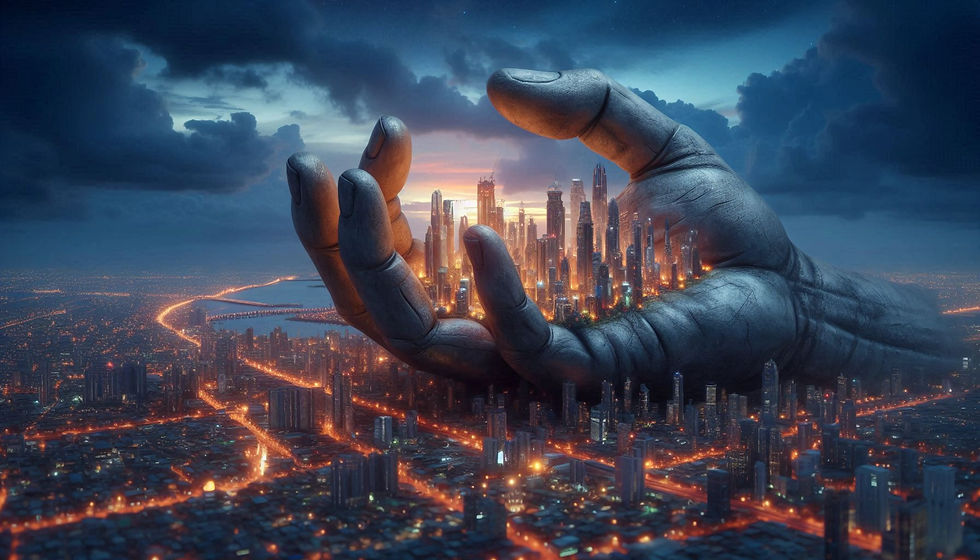
That's where judgment comes in.
Judgment decides which trend to ignore. Which headline to rewrite. Which visual tells the story in a single glance. Which campaign feels authentic instead of manufactured. AI can produce hundreds of possibilities, but it can't tell you which one genuinely reflects your audience, your brand, or the moment you're trying to create.
Ironically, AI has made originality more valuable, not less.
When content becomes easier to produce, audiences become harder to impress. They're no longer comparing your work to last year's campaign, they're comparing it to everything they saw in the last five minutes. That includes creators, memes, brands, influencers, news outlets, and the friend who somehow took a better photo of their lunch than your latest product shoot.
The competition isn't another marketing team sitting across town. It's everything else competing for attention. That's why the smartest marketers aren't asking, "How can AI make us faster?" They're asking a different question: "How can AI give us more time to think?" That's a much better use of technology.

Let AI handle repetitive work. Let it organize ideas, generate first drafts, resize assets, or automate tedious tasks. Then use the time you've gained to do the things algorithms still struggle with: understanding people, spotting cultural shifts, telling memorable stories, and creating work that feels unmistakably human.
Because attention has always been earned, never guaranteed.
People won't remember that your campaign used AI. They won't tell their friends that your product description was generated in twelve seconds or that your social media calendar was automated. They'll remember how your brand made them feel, whether it solved a problem, and whether it gave them a reason to stop, even briefly, in a world that rarely does.
That's the irony of modern marketing. As technology becomes more powerful, the brands that stand out won't be the ones shouting the loudest or publishing the fastest. They'll be the ones that understand something AI still can't manufacture on demand: relevance.
The future won't belong to the brands with the most artificial intelligence. It will belong to the ones that give people a reason to care. At 123RF, we believe the best technology doesn't replace creativity, it removes the friction that gets in its way. From high-quality visuals to AI-powered creative tools, the goal isn't to help brands create more noise.
It's to help them create work that's impossible to ignore.
Because in the end, attention isn't won by algorithms.
It's earned through ideas.


Comments